Is a Security Deposit Considered Rental Income?
A security deposit is not rental income when you receive it if you plan to return it to the tenant at the end of the lease, according to IRS Publication 527.
When a security deposit becomes taxable income
- You keep some or all of it because the tenant broke the lease or damaged the unit: include the amount you keep in income in the year you keep it.
- It's really advance rent: if the "deposit" is meant to be used as the final month's rent, it's advance rent and is income when you receive it.
How to record security deposits in your books
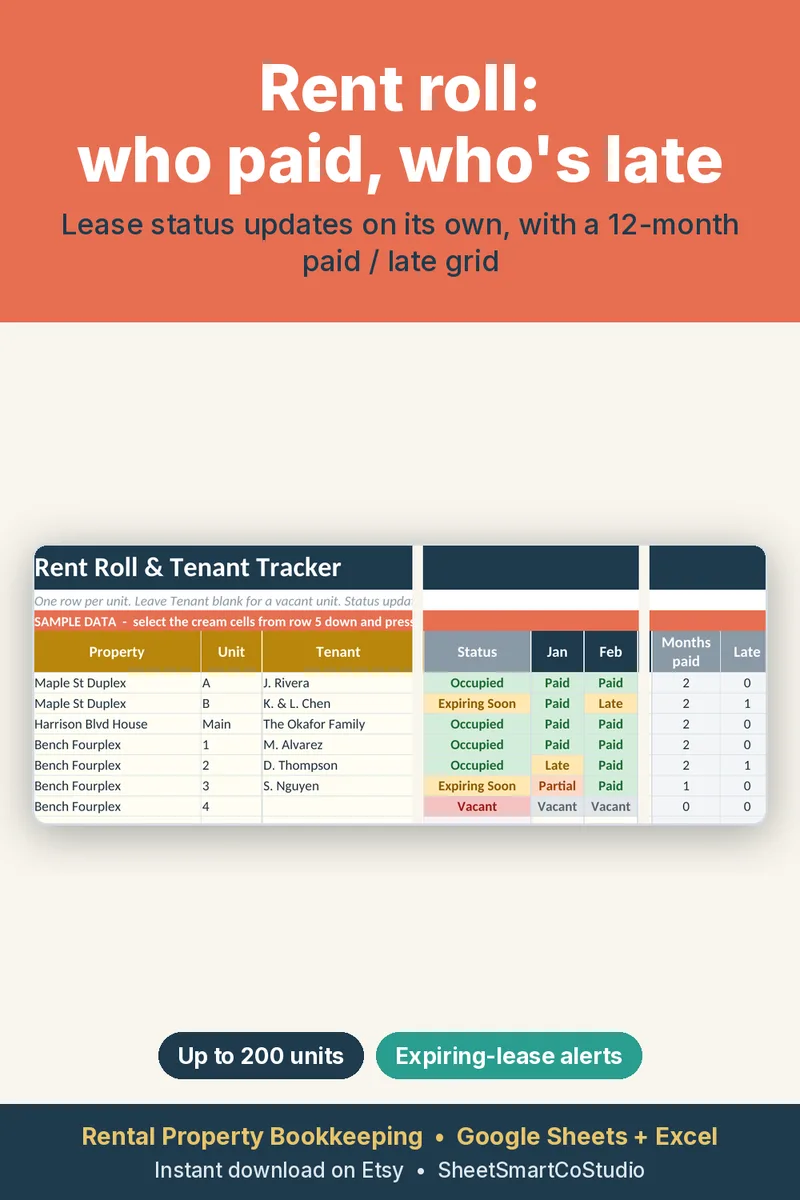
Keep deposits out of your rental income and track them on your rent roll (deposit held per unit). When a tenant moves out, record any amount you keep as income, and any damage repairs as expenses.
Bank imports make this easy to get wrong, because a deposit lands in the account just like rent. A good import routine flags deposits so they don't inflate your rental income.
See it on Etsy ($14.99, one-time)
FAQ
Is a security deposit taxable income?
Not when you receive it if you intend to return it. It becomes income if and when you keep it, or immediately if it's actually advance rent.
Is last month's rent a security deposit?
No. Last month's rent collected up front is advance rent and is income in the year you receive it, even though it covers a future month.
Do I report a returned security deposit?
No. A deposit you return in full was never income, so there's nothing to report.
Where do kept security deposits go on Schedule E?
Amounts you keep are reported as rent received on line 3.